Article -> Article Details
| Title | Clinical Trial Requirements for Generic Tablet and Capsule Manufacturers |
|---|---|
| Category | Business --> Healthcare |
| Meta Keywords | Clinical Monitoring |
| Owner | CurexBio |
| Description | |

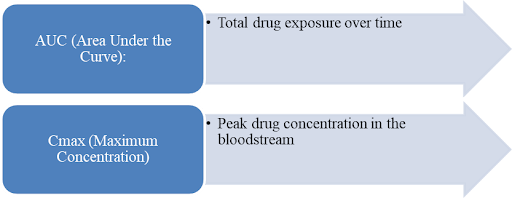
For manufacturers of generic tablets and capsules, market entry revolves around a vital question: whether the product performs identically to the brand-name reference. Unlike innovator drugs, generics do not need to undergo extensive clinical trials; instead, they must demonstrate bioequivalence (BE), proving that the generic releases the same amount of active ingredient into the bloodstream at the same rate as the reference product. This streamlined approach, established by the Hatch-Waxman Amendments of 1984, allows the FDA to approve generic drugs without repeating extensive preclinical and clinical studies required for New Drug Applications (NDAs). However, the clinical trial requirements for generic tablets and capsules are rigorous, specific, and continually evolving. The Regulatory Framework: ANDA and BioequivalenceFor oral solid dosage forms like tablets and capsules, approval is obtained via the Abbreviated New Drug Application (ANDA). Applicants do not need to submit Phase I, II, or III clinical trials for safety and efficacy re-proofs but must demonstrate bioequivalence to the Reference Listed Drug (RLD) through in vivo pharmacokinetic studies conducted in healthy volunteers, focusing on two key parameters.
For bioequivalence, the 90% confidence intervals for AUC and Cmax must be within the 80–125% acceptance range compared to the reference product. The ICH M13A Update:A significant change took place in January 2025 with the implementation of the ICH M13A guideline on bioequivalence for immediate-release solid oral dosage forms, adopted by both the FDA and EMA. This guideline establishes globally harmonized bioequivalence standards for oral drugs, including tablets and capsules. Key Changes Under ICH M13A
Manufacturers of non-high-risk drugs may now conduct only one bioequivalence study, rather than requiring studies under both fasting and fed conditions, leading to reduced development time and lower clinical study costs.
ICH M13A provides a framework for bioequivalence (BE) studies, assisting companies in choosing appropriate study designs, analytical methods, and statistical techniques that meet both local and global regulatory requirements.
The guidance outlines strategies to handle pharmacokinetic variability in absorption, essential for complex oral formulations, facilitating accurate assessments of generic products against bioequivalence standards.
ICH M13A standardizes bioequivalence study requirements across ICH regions, including the US and EU, minimizing regulatory redundancies and expediting access to safe and effective generic drugs globally.
Generic applicants under ICH M13B can receive approval for various drug strengths without extensive in vivo testing if they satisfy certain scientific criteria. WHO Requirements for Global MarketsManufacturers targeting markets outside the US and EU must ensure that BE study reports in product dossiers comply with World Health Organization (WHO) guidance for bioequivalence studies and Good Clinical Practice guidelines. Key WHO requirements include:
Read Full Article here:
| |