
Article -> Article Details
| Title | Standard vs Custom Lifting Beams: Key Differences | Grab N Lifters |
|---|---|
| Category | Business --> Business Services |
| Meta Keywords | Lifting Beam Manufacturers |
| Owner | Grab N Lifters |
| Description | |
| Selecting the right lifting equipment is essential for safe material handling, efficient crane operations, and long-term cost control. Experienced Lifting Beam Manufacturers can help industrial facilities determine whether a standard lifting beam or a custom-engineered solution best suits their requirements. The right choice depends on load dimensions, lifting capacity, available headroom, operating conditions, and the frequency of lifting operations.
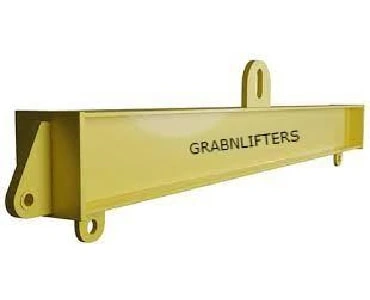
What Is a Standard Lifting Beam?A standard lifting beam is a pre-designed lifting attachment manufactured in established configurations and capacities. It typically features defined lifting points and a structural arrangement suitable for common material-handling applications. These beams are often appropriate for facilities that handle similar loads repeatedly and have predictable lifting requirements. Their established designs can simplify equipment selection, procurement, and operator familiarisation. Standard lifting beams are commonly considered for warehouses, manufacturing plants, fabrication workshops, and industrial storage facilities. However, buyers must verify that the selected model matches the actual load, crane configuration, and intended lifting procedure rather than relying on rated capacity alone. What Is a Custom Lifting Beam?A custom lifting beam is engineered around a particular load, application, or working environment. Its dimensions, lifting points, connection arrangements, and structural configuration can be developed to address requirements that standard equipment cannot adequately accommodate. Custom solutions may be useful when handling unusually shaped machinery, long structural components, delicate assemblies, or loads with offset centres of gravity. They can also address restricted headroom, specialised attachment points, and repetitive lifting tasks that require a particular arrangement. A properly engineered custom beam should be designed, manufactured, inspected, and documented according to the applicable requirements for its intended use. Standard vs Custom Lifting Beams: Key Differences1. Design and ConfigurationStandard lifting beams use established configurations, making them suitable for relatively straightforward lifting operations. Custom beams offer greater flexibility in span, attachment locations, connection geometry, and other application-specific features. For facilities handling different load sizes or unusual components, a custom configuration may provide a more practical solution. The design must account for the complete load path and the forces acting on the equipment. 2. Initial Cost and Procurement TimeStandard lifting beams can be economical when an existing model meets the required specifications. Established designs may also reduce the time needed for product selection and procurement. Custom lifting beams generally require additional engineering, design reviews, and manufacturing coordination. These activities can increase initial costs and lead times. However, purchase price should not be the only consideration. Reduced setup time, improved handling efficiency, and fewer workarounds may make a custom solution worthwhile for frequent or specialised lifting operations. 3. Load Compatibility and FlexibilityA standard beam works well when the load geometry, weight distribution, and lifting points align with its approved configuration. Problems may arise when the load has unusual dimensions or requires specific support positions. Custom equipment can accommodate defined lifting points, unusual load shapes, and application-specific clearance requirements. This can help improve load control when supported by appropriate engineering calculations and a documented lifting plan. 4. Operating EfficiencyStandard beams can support efficient operations where the same type of load is handled repeatedly. Their straightforward configurations can make selection and setup more predictable. Custom beams may improve workflow when operators repeatedly handle specialised components or perform lifts in confined spaces. Features designed around the actual task may reduce rigging adjustments and simplify load positioning. The benefits depend on the application, lifting frequency, and quality of the equipment design. When Should You Choose a Standard Lifting Beam?A standard lifting beam may be the right option when your facility has routine lifting requirements and a suitable model is available. Consider standard equipment when:
Before purchasing, confirm the beam's rated capacity, self-weight, connection details, inspection documentation, and compatibility with the complete lifting arrangement. When Is a Custom Lifting Beam the Better Choice?Custom equipment deserves consideration when a standard model cannot meet the operational or engineering requirements. Typical situations include lifting oversized machinery, supporting long or flexible components, working within restricted overhead clearance, or accommodating multiple lifting points. Custom designs may also benefit facilities that repeat a specialised lift throughout their production process. When evaluating options from Lifting Beam Manufacturers, provide accurate load drawings, weight details, centre-of-gravity information, lifting-point positions, crane specifications, and available headroom. These details help engineers assess the application and recommend an appropriate configuration. Never assume that a custom design is automatically safer or more efficient. Its suitability depends on competent engineering, correct manufacture, verification, and proper use. How to Compare the Total Cost of OwnershipA practical purchasing decision should consider more than the initial quotation. Evaluate engineering costs, delivery timelines, installation requirements, operator training, inspection needs, maintenance, and potential downtime. For occasional, straightforward lifts, a suitable standard beam may offer better overall value. For repetitive operations involving specialised loads, a custom beam may justify its additional investment through improved workflow and reduced setup complexity. Discuss these factors with Lifting Beam Manufacturers and request a quotation based on your actual application. Comparing equipment against the same technical requirements makes supplier evaluations more meaningful. ConclusionChoosing between standard and custom lifting beams depends on your facility's load characteristics, crane configuration, operating environment, and budget. Standard beams are often suitable for routine applications, while custom-engineered solutions can address specialised loads, restricted spaces, and unique lifting requirements. Grab N Lifters offers industrial lifting equipment solutions for material-handling applications. Explore the lifting beam manufacturer page to learn more and discuss your requirements with the team. Working with experienced Lifting Beam Manufacturers can help you identify a suitable solution based on your operational needs, technical specifications, and long-term equipment objectives. Other Recommendations: Hydraulic Clamshell Grab Bucket | |