Article -> Article Details
| Title | DC Granules vs Powder Blends: Key Differences in Pharmaceutical Tableting | Bhasya International |
|---|---|
| Category | Business --> Business Services |
| Meta Keywords | Dc granules Exporters in India |
| Owner | Bhasya International |
| Description | |
| In modern pharmaceutical manufacturing, selecting the right raw-material form can significantly influence tablet quality, production efficiency, and process consistency. Dc granules Exporters in India supply directly compressible materials designed to simplify tableting by offering improved flow and compression characteristics. Powder blends, on the other hand, depend heavily on formulation design and processing conditions to achieve reliable tablet production. Understanding the differences between these two approaches can help pharmaceutical manufacturers make better decisions during formulation development and commercial manufacturing.
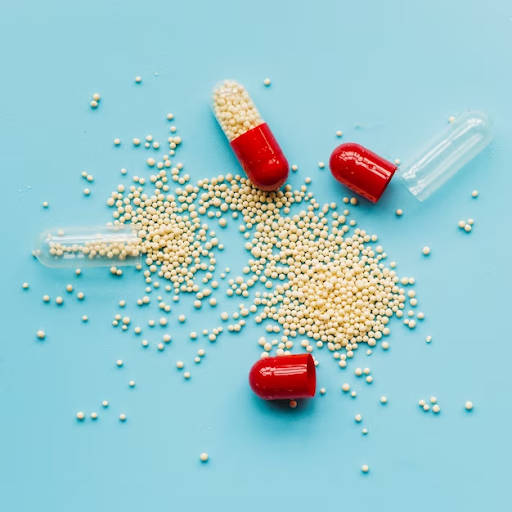
What Are DC Granules?DC granules, or Direct Compression granules, are engineered granular materials developed specifically for compression into tablets without requiring a separate granulation step at the tablet manufacturing facility. Granulation increases particle size and can improve flowability, reduce dust formation, and provide more consistent compression characteristics. The particle characteristics of DC granules are generally controlled during manufacturing to provide suitable bulk density, particle-size distribution, flow properties, and compressibility. This makes them particularly useful for formulations where reliable die filling and consistent tablet weight are important. With direct compression, the formulation typically moves through operations such as sieving, blending, lubrication, and compression rather than undergoing a separate granulation and drying process. What Are Powder Blends?Powder blends are mixtures of pharmaceutical ingredients and excipients in powder form. Depending on their physical characteristics, these powders may be processed through direct compression or may require additional granulation to improve their tableting performance. Fine powders can present challenges during manufacturing. Poor flow may cause inconsistent die filling, while differences in particle size or density can increase the possibility of segregation. Excessive dust can also create handling and material-loss concerns. For this reason, powder-based formulations need careful evaluation of properties such as particle size, bulk density, flowability, compressibility, moisture content, and segregation tendency before they are selected for a high-speed tablet manufacturing process. DC Granules vs Powder Blends: Key DifferencesThe primary difference between DC granules and conventional powder blends is the physical form and the degree of particle engineering performed before the material reaches the tablet manufacturer. 1. FlowabilityFlowability is one of the most important considerations in tablet production. A material with good flow characteristics can move more consistently from the hopper into the tablet die. DC granules generally offer improved flow compared with fine powders because granulation creates larger, more physically robust particles. This can help reduce problems associated with poor powder movement and improve die filling consistency. Powder blends may have variable flow depending on particle morphology, particle-size distribution, electrostatic behavior, and the characteristics of individual ingredients. 2. CompressibilityTablet compression requires materials that can consolidate under pressure and form mechanically strong tablets. DC granules are specifically engineered to provide suitable compression characteristics. Their particle structure can support consistent compaction and tablet formation. Powder blends may demonstrate excellent or poor compressibility depending on the API and excipient combination. Some formulations require additional formulation optimization or granulation before they can achieve the desired tablet hardness and mechanical strength. 3. Manufacturing ProcessOne of the biggest advantages of DC granules is process simplification. Manufacturers can blend the required ingredients and proceed toward compression without conducting an additional in-house granulation stage when the formulation is suitable for direct compression. This can reduce processing steps, equipment requirements, energy consumption, and processing time. Direct compression is therefore frequently considered when manufacturers want to streamline solid-dose manufacturing. Powder blends that are not suitable for direct compression may require wet or dry granulation, followed by additional processing such as drying, sizing, and blending. 4. Dust GenerationFine pharmaceutical powders can generate dust during material transfer, dispensing, and blending. Granulation can physically modify powders into larger particles, helping reduce dust formation. DC granules are therefore useful where cleaner handling and reduced airborne dust are desirable. Manufacturers can also benefit from reduced material loss during processing. 5. Content and Weight UniformityConsistent material flow can contribute to reliable die filling and tablet weight control. DC granules with a controlled particle-size distribution and suitable flow properties can make formulation handling more predictable. However, granules do not automatically guarantee content uniformity. Formulation design, API loading, particle-size differences, blending conditions, segregation behavior, and process controls remain important factors. Why Pharmaceutical Manufacturers Consider DC GranulesFor manufacturers evaluating DC granules Exporters in India, the technical specifications of the material should be considered alongside price and availability. Important parameters may include particle-size distribution, bulk and tapped density, moisture content, flowability, compressibility, assay, microbial quality, and batch-to-batch consistency. A suitable supplier should also be able to provide relevant documentation, such as certificates of analysis and product specifications, according to the requirements of the purchasing pharmaceutical company. Another important consideration is formulation compatibility. A DC material that performs well in one formulation may not automatically provide identical results in another. API properties, dose, lubricant concentration, compression force, tablet dimensions, and target dissolution profile can all affect final performance. DC Granules vs Powder Blends: Which Should Manufacturers Choose?There is no universal choice for every pharmaceutical formulation. DC granules can be advantageous when a formulation requires improved flow, reduced dust, simplified processing, and reliable compression performance. Powder blends may remain appropriate when the formulation already demonstrates suitable flow and compression properties or when specific APIs and excipients require another processing approach. Formulation scientists should therefore evaluate both options through laboratory and pilot-scale studies. Tests such as flowability measurements, bulk density, compressibility, tablet hardness, friability, disintegration, dissolution, and weight variation can provide meaningful evidence about manufacturing suitability. Research comparing direct compression with other granulation approaches also demonstrates that performance can vary according to drug loading and formulation properties. In one published study, direct compression performance was affected by the flowability and compactability characteristics of the formulation. Choosing a Reliable SupplierWhen sourcing from Dc granules Exporters in India, pharmaceutical companies should look beyond product availability. Consistent manufacturing quality, technical documentation, analytical support, regulatory compliance, packaging standards, and supply reliability are all important considerations. Manufacturers should also confirm whether the granules are appropriate for their intended dosage form and whether the supplier can provide specifications that support formulation development and quality-control requirements. A technically suitable DC material can simplify tablet manufacturing, but supplier qualification remains an essential part of pharmaceutical procurement. ConclusionThe difference between DC granules and powder blends goes beyond particle appearance. DC granules are engineered to provide characteristics such as improved flowability, reduced dust generation, and suitable compression performance, potentially allowing manufacturers to simplify tablet production. Powder blends, meanwhile, provide formulation flexibility but may require additional processing when their natural flow and compression properties are insufficient. The right selection ultimately depends on the API, excipient system, dosage strength, equipment, and desired tablet characteristics. For companies researching DC granules Exporters in India, evaluating technical specifications, quality documentation, consistency, and formulation compatibility is essential. By comparing these factors systematically, pharmaceutical manufacturers can select a material approach that supports efficient processing and consistent tablet quality. Suggested SEO URL: the existing target URL is appropriate for the keyword focus. Other Recommendations: Top Dabigatran Exporters in Hyderabad | |